Why does my roof make popping noises during the day?
A popping or creaking roof in Gardena daylight is usually the roof structure and covering expanding as it heats up. Here is why Gardena heat makes it louder, and when a noise is a warning instead.
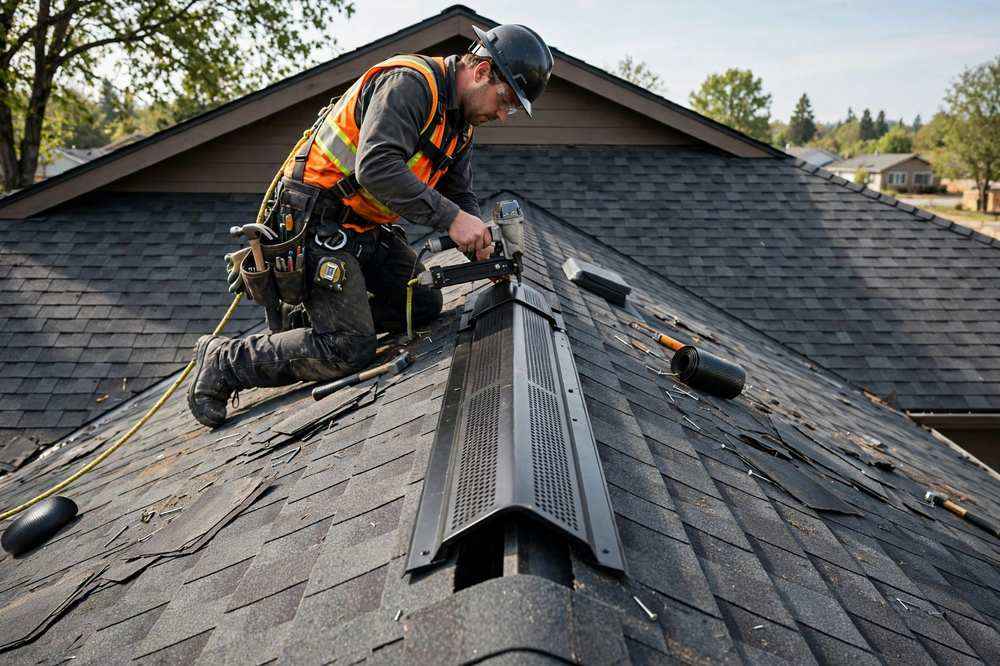
What causes daytime popping
Most daytime popping is thermal expansion. As the sun heats a roof, the covering, decking, and framing expand at slightly different rates. Joints, fasteners, and boards shift a fraction of an inch, and that shift releases as a pop or creak. As the roof cools in the evening, it contracts again, which is why the same roof can pop in the morning as it warms and tick as it cools at night.
Gardena makes this more noticeable than a cooler climate would. Summers are long, dry, and sunny, with high UV exposure, and roof surfaces get far hotter than the air temperature. A roof that heats quickly in direct sun and cools after sunset goes through a strong daily expansion cycle, and older fasteners and decking have less give than new material, so the movement is more audible.
Metal components are often the loudest part of the story. Flashing, vents, and metal roofing expand more noticeably than wood, so a pop that seems to come from a vent or a valley is often a metal part moving against its fasteners, not the whole roof failing.
Ventilation, heat build-up, and why they matter
Ventilation does not stop thermal expansion, but poor ventilation makes the heat side of the cycle worse. When an attic traps hot air, the roof deck stays hotter for longer, shingles age faster from heat, and the daily temperature swing the structure experiences can be larger. That is one reason a popping roof is worth pairing with a ventilation check rather than dismissing outright.
Signs that ventilation deserves attention include an attic that feels stifling even after sunset, shingles curling prematurely, and popping that has clearly got louder over one or two summers. Our roof ventilation page explains how ridge, soffit, and gable vents work as part of a roofing assembly. Ventilation is a roofing-assembly item; attic insulation itself is a separate trade scope and is not presented here as roofing work.
When popping is a warning, not just expansion
- Popping plus a new leak or stain. Movement has opened a joint or flashing somewhere, and water is now getting in.
- Popping plus visible movement. A lifted shingle, a slipped tile, or a vent that has shifted position is damage, not just noise.
- Popping plus sagging. Any sag in a roof plane or ceiling needs a prompt structural look, whatever the noise sounds like.
- A sudden change. A roof that was quiet for years and suddenly starts popping loudly after storm work, a reroof, or new rooftop equipment has had something change, and that change is worth identifying.
- Popping that continues all night in calm, mild weather. Pure thermal popping follows the heating cycle; noise with no temperature change behind it deserves a check.
None of these, on their own, proves a roof is failing. They are the points where an inspection earns its keep, because the cause is visible from the attic and the roof surface in a way it never is from the living room.
What an inspection looks for
A roof inspection for noise checks the attic first: daylight through boards, loose or lifted decking, fasteners that have worked free, and vents or flashing that move by hand. On the roof surface it checks shingle and tile condition, flashing seals, and whether any covering has buckled or lifted. If the finding is ordinary thermal movement with everything sealed and fastened, the honest answer is that no repair is needed, and that answer should be given plainly.
If the inspection finds a real defect, the fix depends on the defect: refastening or resealing a moving vent or flashing, replacing lifted shingles through roof repair, or addressing ventilation through roof ventilation. Where the roof is broadly at the end of its life, roof maintenance and a replacement conversation are different topics, and they should not be blurred into a noise complaint. Homes in North Gardena and Hollypark, with their postwar tract stock, often show the same heat-ageing pattern, so a popping roof there is common, and still worth checking when it changes.
Get help with a noisy roof in Gardena
If popping comes with a new leak, a sag, or visible shingle or tile movement, call Nexo Xpert Roofing at +1 (562) 600-4041 to discuss an inspection and an estimate. A noise on its own is usually thermal movement; a noise plus damage is worth a look.
Common questions
Is popping in my roof dangerous?
Usually not on its own. Daytime popping is most often thermal expansion as the roof heats up. It becomes a concern when it comes with a leak, visible movement, sagging, or a sudden change from a previously quiet roof.
Why does my Gardena roof pop more than roofs in cooler places?
Gardena's long, dry, sunny summers put roofs through a strong daily heating and cooling cycle, and high UV exposure ages fasteners and sealants. Older roofs have less give, so the same expansion is more audible.
Can better ventilation stop roof popping?
Ventilation can reduce heat build-up in the attic, which helps the roof age more slowly, but it will not eliminate thermal expansion entirely. A roof will still expand as it heats; the goal is a roof that moves without opening a joint or breaking a seal.
Should I worry if the popping is only in the morning?
Morning popping as the sun first hits the roof is the classic thermal-expansion pattern and is the least worrying form. Evening ticking as it cools is the same mechanism in reverse.
Sources and checks
Sources and checks: CSLB Check a License (California Contractors State License Board, C-39 roofing classification); City of Gardena Building and Safety Division, 1700 W 162nd St (re-roof permits, CF1R forms, valuation-based fees under the 1 July 2026 schedule); CAL FIRE/OSFM Fire Hazard Severity Zone Viewer (parcel fire-zone check). No licence number, firm price, or warranty term is claimed on this site.