Phone-only contact
Call +1 (562) 600-4041 to discuss an estimate.
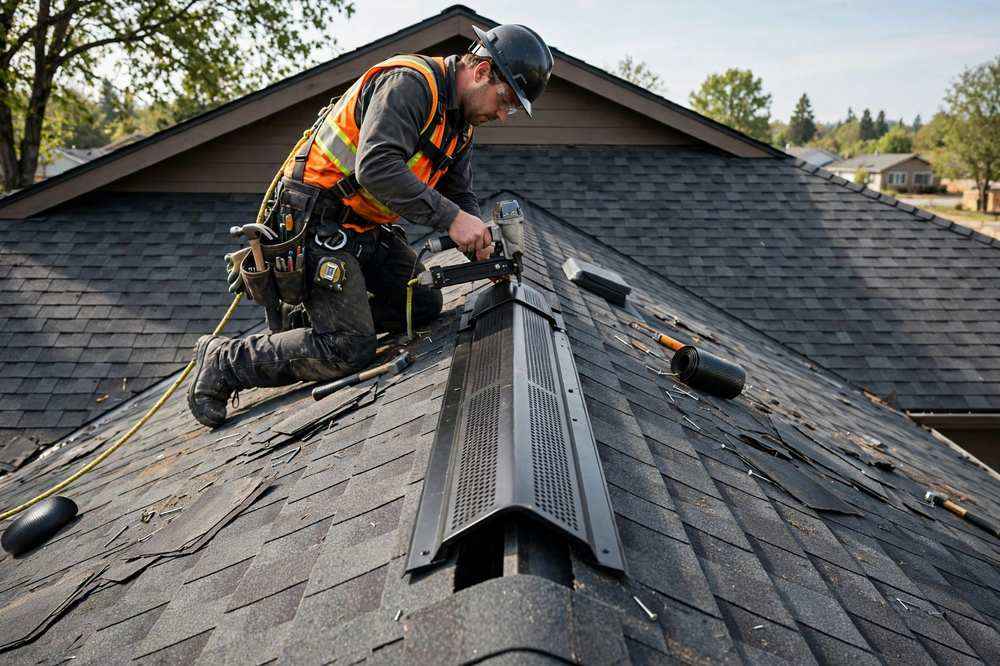
Roof ventilation in Gardena is an assembly problem: air must enter at the soffit, travel under the deck, and leave at the ridge or gable — and if any leg of that path is missing, the attic bakes. This page covers ridge, soffit and gable ventilation as part of a roofing assembly, for attic heat and moisture in Gardena summers. Attic insulation is mentioned only as a related, partnered upgrade, not as proven C-39 work. Call +1 (562) 600-4041 to discuss an estimate.
Call +1 (562) 600-4041 to discuss an estimate.
Review the approach before deciding.
Equipped vehicles and respectful cleanup.
A Gardena contractor serving Gardena homes.
Ventilation is assessed as intake, pathway and exhaust together; adding exhaust without intake, or intake without exhaust, does not ventilate an attic.
Existing soffit intake, ridge and gable exhaust, and any blocked or missing legs of the path are mapped before vents are added.
Blocked or missing soffit intake is restored or added, because exhaust vents cannot move air that never enters.
Ridge vents are installed or restored as part of reroof or repair work, giving hot air a continuous exit along the ridge.
Gable vents are assessed where ridge venting alone does not serve a roof section, and balanced against intake so air does not short-circuit.
Attic insulation is discussed only as a related, partnered upgrade alongside ventilation work — it is not presented here as proven C-39 roofing work, and its scope is confirmed separately.
Share what is happening and receive a clear next step from the local team.
Roof ventilation in Gardena means ridge, soffit and gable ventilation working as part of a roofing assembly: soffit vents admit cooler air low, ridge vents exhaust hot air high, and gable vents serve sections where that path is incomplete.
Gardena summers make the stakes concrete: long, hot, dry months heat attics from above, and an attic with no intake or no exhaust holds that heat against the deck and shingles, while moisture from winter rain and household sources has nowhere to go. The common failure is imbalance — a new ridge vent over painted-shut soffits, or generous soffit intake with no exhaust — so ventilation work here starts with the whole path, not with a vent count. This page does not claim a vent quantity, airflow figure or insulation performance figure, because none has been verified for a specific Gardena roof; each roof's intake and exhaust are assessed on site.
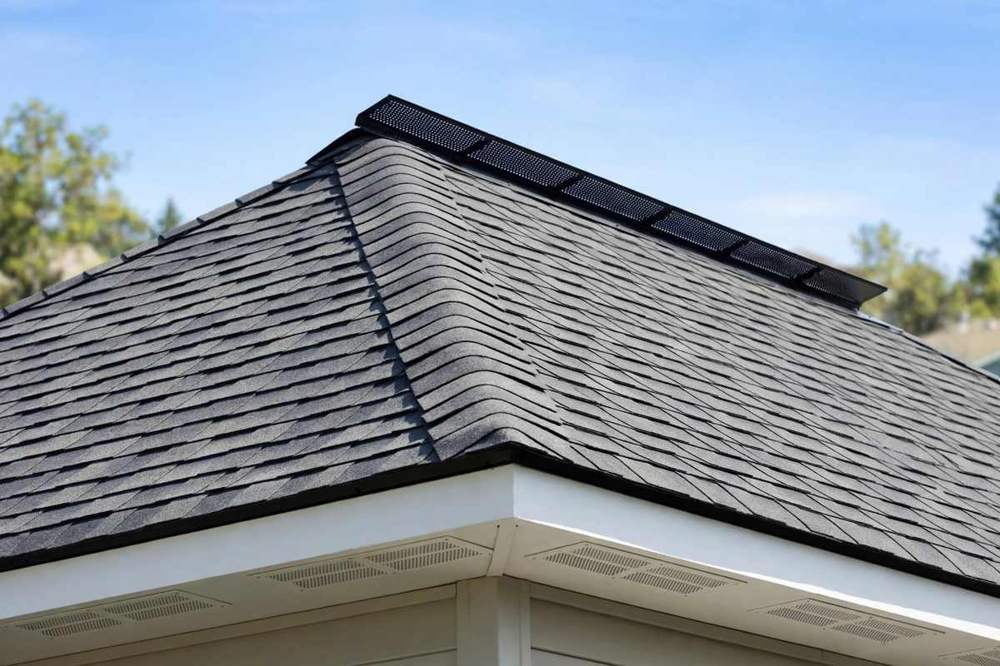
Soffit intake, ridge and gable exhaust, and blockages are mapped, and the attic's heat and moisture signs are noted.
You get a plan for the whole path — which intake and exhaust legs change, and why — rather than a single vent added in isolation.
Blocked soffit vents are cleared or new intake installed, so exhaust work has air to move.
Ridge or gable exhaust is installed as part of the roofing assembly, flashed and detailed as roofing work.
The finished path is walked through: intake clear, exhaust open, and any related insulation upgrade noted as its own, separately confirmed scope.
Intake openings are checked for paint, debris and insulation blockage before any exhaust is added.
Ridge vents are flashed and capped as part of the roofing assembly, not surface-mounted over a closed ridge.
Gable vents are weighed against ridge exhaust so airflow is not short-circuited across the attic.
The under-deck path itself — baffles, insulation encroachment, blocked bays — is checked, not just the vent covers.
Staining, mustiness and heat patterns in the attic are read as ventilation evidence, not ignored.
Where insulation is relevant, it is noted as a related, partnered upgrade with its own confirmation, not folded into roofing scope.
A hot attic with little airflow usually has a missing or blocked leg of the ventilation path; mapping finds which leg.
Trapped moisture with no exhaust path points to ventilation imbalance, checked alongside any leak source.
A reroof is the practical moment to fix ventilation, because ridge work and intake access are open anyway.
Daytime thermal movement can accompany a hot, poorly ventilated attic; ventilation is one check among roof-condition checks, not a promised cure.
Gardena is an incorporated Los Angeles County South Bay city (incorporated 11 September 1930, 5.86 sq mi, 2020 population 61,027), in Climate Zone 8, with a median home built year of 1964 and the largest building decade 1950–59. Rain here is concentrated in winter (about 13–14 inches a year, November–March, near-zero June–September), with Santa Ana wind season and strong summer sun and heat ageing roofs. Design criteria from City of Gardena form BLD-020 (rev. 12/2/25) are 100 mph wind, Exposure C, Seismic Design Category D. Permits for re-roofs go through the City of Gardena Building & Safety Division, City Hall Room 101, 1700 W 162nd St — not LADBS. Gardena permit fees are valuation-based under the 1 July 2026 schedule; there is no flat residential reroof fee, and CF1R forms are required for a reroof permit. For ventilation, Gardena's climate is the argument: summer heat loads the attic for months, winter rain adds moisture, and the houses most affected are the 1950s–70s tract homes whose original ventilation was sized for a different era of roofing and insulation. Ventilation upgrades on those homes are therefore assembly work — intake, pathway and exhaust together — not a vent added to a roof that cannot breathe.
Related reading: Why does my roof make popping noises during the day?.
Founding-stock homes where original ventilation legs are most likely to be blocked, painted over or never completed.
1960s tracts where repeated roof sections share the same ventilation pattern, making imbalance easy to recognise.
Directional area where tract attics face the same long summer heat load and benefit from a whole-path check.
Months of dry heat load the attic; ventilation that cannot move air leaves that heat against the deck.
Rain-season moisture trapped in a still attic feeds mustiness and deck risk; exhaust without intake does not clear it.
Ventilation fixed during a reroof avoids reopening a finished roof to add the ridge or intake it lacked.
A ridge vent had been added to a roof whose soffit vents were painted shut; the attic stayed hot.
Soffit intake was restored first, giving the ridge exhaust air to move; attic heat and stuffiness improved.
Maintenance: Exhaust without intake does not ventilate — restore intake first.
An attic ventilated only at the gables held heat in sections the gables did not serve.
Ridge exhaust and soffit intake were added as a balanced path, with gable vents kept where they still served.
Maintenance: Balance the path; do not just add more vents of one kind.
A reroof was planned on a home whose attic had baked every summer.
Ridge ventilation and soffit intake were built into the reroof assembly, rather than added afterwards at extra disruption.
Maintenance: Fix ventilation while the roof is open.
Ventilation failures are almost always balance failures — one leg of the path missing, blocked or working against another.
Paint, debris and insulation close the intake vents, leaving exhaust vents with nothing to move.
A new ridge vent over closed soffits looks like ventilation and ventilates little.
Unbalanced ridge and gable vents can pull air across part of the attic and leave the rest still.
Insulation pushed into eaves or bays blocks airflow even where vents themselves are open.
Ventilation expertise is restraint: not adding the vent that sells easiest, but fixing the leg of the path that is actually missing — and saying so when the missing leg is insulation, a partnered scope, rather than roofing.
Paraphrased summaries of five 5-star Google reviews; the other 37 reviews are counted in the 4.9-star, 42-review aggregate only.
Full roof replacement plus seamless gutters; praised a detailed consultation, the company's own trained crew rather than subcontractors, daily project-manager presence, daily cleanup, and passing inspection.
First full roof replacement and new gutters; praised step-by-step explanation and patience with insurance and financing questions, and clear communication.
Full roof replacement, gutters, gutter guard, and siding work in the reviewer's own account; praised colour renderings, scheduling, organisation, and communication, and options suited to Gardena sun and seasonal rain.
Leak leading to full replacement; praised a fast estimate and inspection, fair repair-versus-replacement advice, a 2-day install, and rooftop photos.
Reroof after poor workmanship and leaks on a new-home build; praised a thorough explanation, insurance-claim help, careful work on a steep roof with a special panel system, and cleanup.
Usually better ventilation: a balanced intake-to-exhaust path matters more than a vent count. An assessment maps which leg is missing before anything is added.
Not if soffit intake is blocked. Ridge exhaust needs intake air to move; without it, the attic stays hot despite the new vent.
No — not as proven C-39 work on this page. Insulation is mentioned only as a related, partnered upgrade, with its scope confirmed separately.
Often, yes: ridge work and intake access are open during a reroof, so ventilation can be built into the assembly rather than retrofitted afterwards.
Not seeing your question? Our local team can help you understand urgency, scheduling and what to expect.
Ask the local team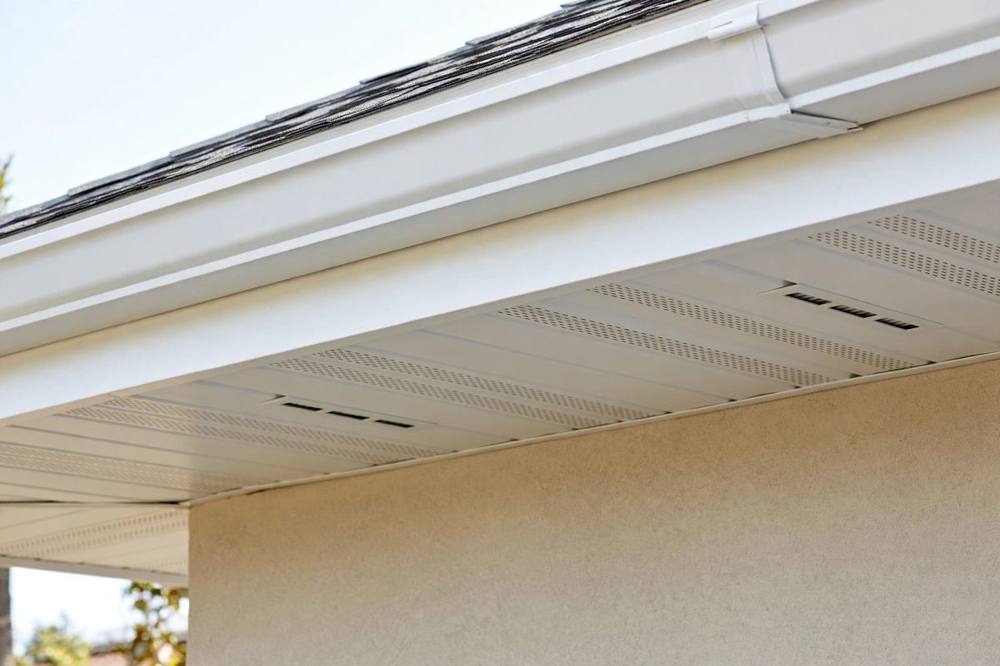
Soffit intake is the ventilation leg most often blocked — fascia and soffit work restores it.
View service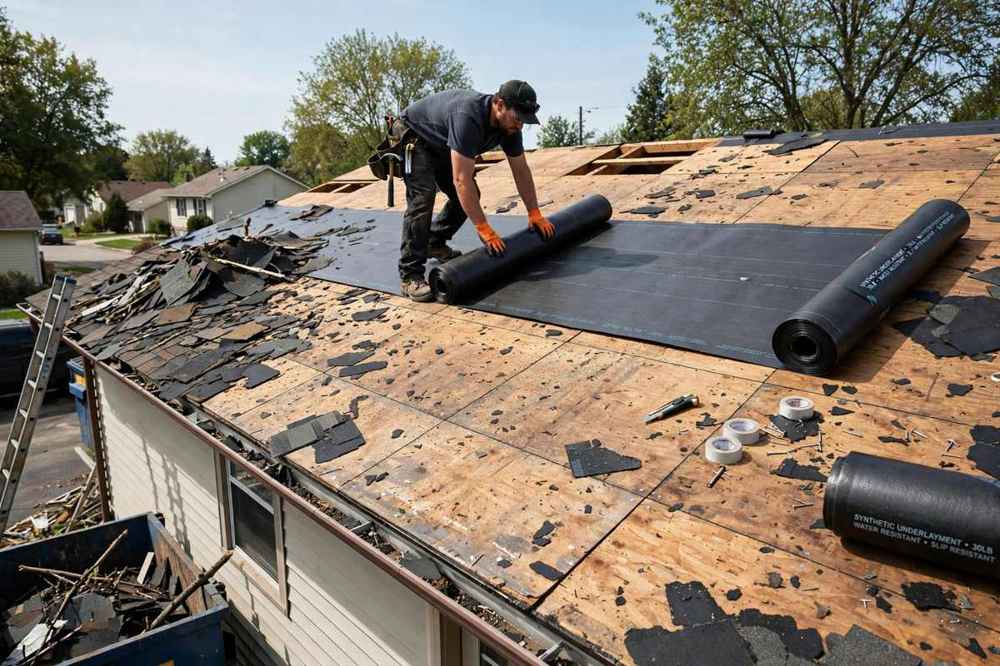
A reroof is the practical moment to build ventilation into the assembly.
View service
An inspection maps intake, pathway and exhaust before the summer heat tests them.
View service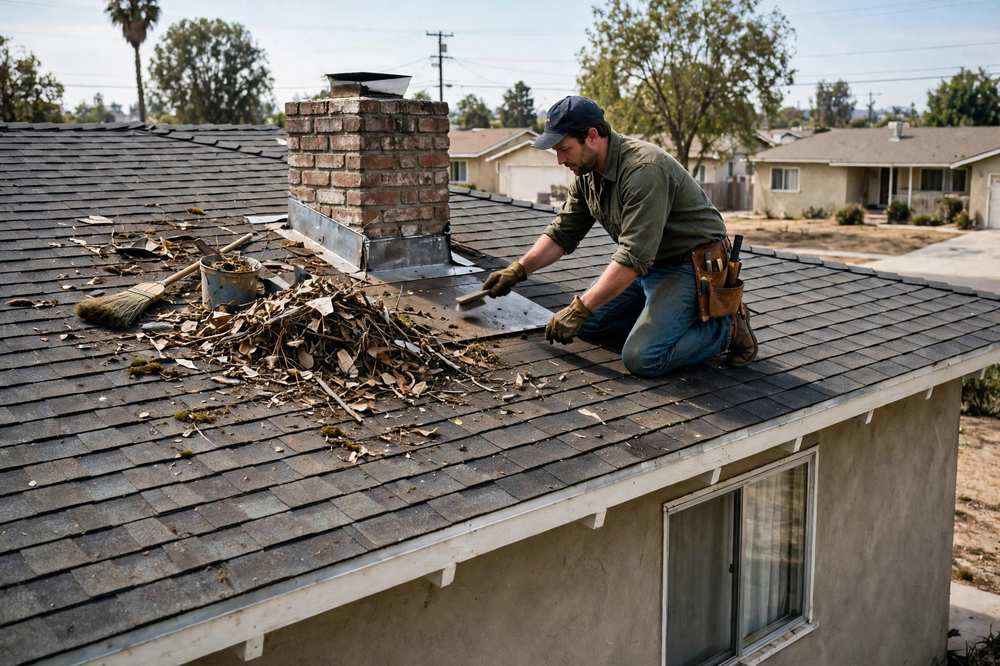
Seasonal checks keep vents clear of paint, debris and insulation blockage.
View serviceCall us at +1 (562) 600-4041 to discuss an estimate. Our phones are open 24 hours every day. Tell us what the roof is doing and we will tell you what it needs.