Phone-only contact
Call +1 (562) 600-4041 to discuss an estimate.
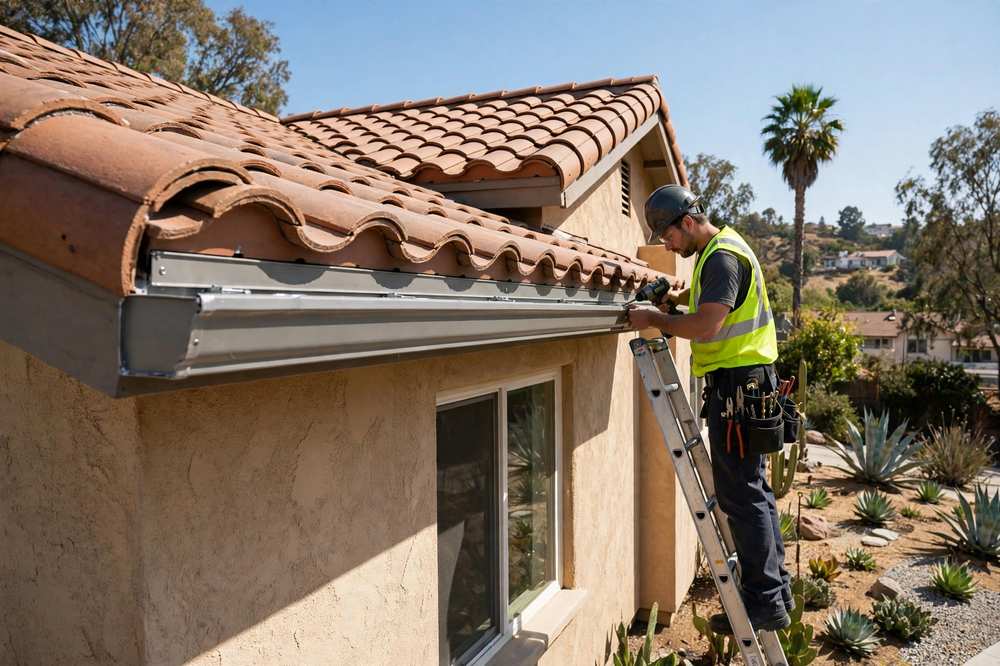
Gardena's rain arrives in concentrated winter bursts, so a gutter that holds water in July becomes an overflowing, fascia-soaking problem in January. This page covers gutter repair in Gardena — re-pitching, resealing, re-hanging and section replacement — and how to tell a gutter failure from a roof-edge failure before you pay for either. Call +1 (562) 600-4041 to discuss an estimate.
Call +1 (562) 600-4041 to discuss an estimate.
Review the approach before deciding.
Equipped vehicles and respectful cleanup.
A Gardena contractor serving Gardena homes.
A repair starts with the whole run, not just the drip you noticed, because a sagging mid-section is often the cause of a leaking end cap.
Every hanger, seam, end cap and downspout is checked from roof edge to ground, with photos of problem areas and a written summary.
Sagging runs are reset to a consistent slope toward the downspout, with new hangers set into solid fascia wood, not soft board.
Joints are cleaned and dried, then sealed with roofing sealant suited to sun and rain; badly rusted sections are cut out and spliced in matching profile.
Each downspout is flushed and checked for crushing or blockage, and discharge is directed away from the foundation.
Water is run through the whole system and every joint watched before we leave; old metal is hauled away and the repair is walked through with you.
Share what is happening and receive a clear next step from the local team.
Gutter repair in Gardena is the work of restoring a rain-handling system that has failed, rather than replacing it: re-pitch a sagging run, seal a leaking seam or end cap, reattach hangers, replace a rusted section, and reconnect a downspout so water leaves the roof and the foundation alone.
Why Gardena timing matters: long dry summers bake sealant and let debris sit, then the first winter storm tests every weak joint at once. Homes from the 1950s–70s tract stock — the city's largest building era — often carry older, smaller gutter runs, so overflow in a burst storm does not automatically mean the gutter was installed wrong; it may mean pitch, blockage or a failed joint has finally caught up. Market data only: Angi Los Angeles, updated 9 July 2026, reports an average gutter job of $1,093, with a normal range of $646–$1,619 — that is Los Angeles market data, not a Nexo Xpert price, and your job is quoted only after inspection.
Source: Angi Los Angeles gutter installation, updated 9 July 2026 (market data only, not this business's price).
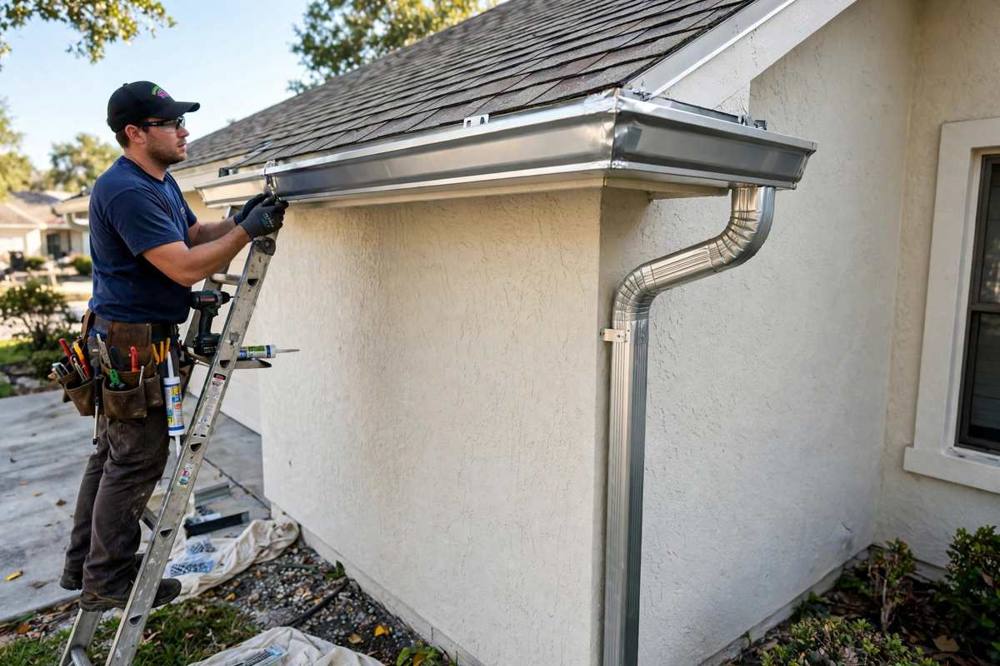
We walk the roofline, check hangers, seams and downspouts, and look for fascia softness or roof-edge flashing failure, with photos before any work.
You get the repair scope in writing — what is being re-pitched, sealed or replaced — and can discuss an estimate before deciding.
Runs are re-pitched to a chalk line, sections spliced in matching profile, joints sealed, and hangers set into solid wood.
Water is run through the system and every joint and outlet watched; a drip or slow spot is fixed on the spot.
Debris and old metal are removed, and you are shown what was done and what to watch at the next rain.
Marks the correct pitch from high point to downspout, so a run that looks level still drains.
Cut aluminium and steel sections cleanly so splices fit tight and seal.
New hardware set into solid fascia; soft fascia is flagged for repair first, not covered over.
Applied to clean, dry joints; sealant over wet debris is not a repair.
The only proof that matters: water in at the high end, water out at the downspout, no drips at joints.
Soft wood is checked before reattaching anything, because new hangers in rotted board will fail again.
We inspect the seam above the stain, reseal or replace the failed section, and check the pitch of the whole run; soft fascia is repaired before the gutter is reattached.
Old hangers come out, fascia is checked, and the run is re-hung at a consistent pitch so water reaches the downspout instead of pooling.
We check for clogs, then redirect discharge away from the house; an undersized or crushed downspout is quoted for replacement.
The bent section is assessed, replaced in matching material where needed, and reattached into solid wood, with the roof edge checked for wind damage.
Gardena is an incorporated Los Angeles County South Bay city (incorporated 11 September 1930, 5.86 sq mi, 2020 population 61,027), in Climate Zone 8, with a median home built year of 1964 and the largest building decade 1950–59. Rain here is concentrated in winter (about 13–14 inches a year, November–March, near-zero June–September), with Santa Ana wind season and strong summer sun and heat ageing roofs. Design criteria from City of Gardena form BLD-020 (rev. 12/2/25) are 100 mph wind, Exposure C, Seismic Design Category D. Permits for re-roofs go through the City of Gardena Building & Safety Division, City Hall Room 101, 1700 W 162nd St — not LADBS. Gardena permit fees are valuation-based under the 1 July 2026 schedule; there is no flat residential reroof fee, and CF1R forms are required for a reroof permit. In practice that means burst-rain capacity and joint survival matter more than appearance: a run that survived a dry summer can fail at the first winter storm, and granule build-up from ageing asphalt roofs is a common blockage source. Winter-rain prep is therefore part of the job — clear runs, sound pitch and free downspouts before the November–March wet season, not during it.
Related reading: How to prepare your roof for Gardena storm season.
Southern Gardena founding stock, where older runs and fascia wear are the usual call — pitch and wood condition are checked together.
1960s tract homes in north Gardena, where long, straightforward runs make pitch errors easy to spot and easy to correct.
Mixed storefront and residential frontage along Gardena Boulevard, where parapet and shared-wall drainage needs a different look than a detached house.
Dry, gusty offshore winds can rip a run loose in an afternoon; hangers must bite solid wood, not just the gutter lip.
Concentrated rain overwhelms a blocked or flat run fast; clearing and pitch come before any sealant.
Ageing asphalt sheds granules into gutters; a cleared run is checked for roof wear at the same time.
A back gutter sagged mid-run, held water after rain, and leaked above a patio where the seam had been caulked once already.
Rotted fascia sections were replaced, new hangers set to a chalk line, and the seam resealed; the flow test showed no standing water and no drips.
Maintenance: A seasonal check each autumn and a hanger check after any big wind event.
A winter windstorm left a front section hanging loose and bent, with hangers pulled from the fascia and water pouring onto porch steps.
The bent section was replaced in matching aluminium and reattached into solid wood, with the end cap replaced and sealed, then flow-tested.
Maintenance: A visual check from the ground each spring and after storms, looking for a run pulling away from the roofline.
Gutters packed with granules and leaves overflowed the back edge, stained the fascia, and backed up at a partly blocked downspout.
Debris was cleared, the downspout flushed, and three weeping seams resealed; the fascia was still solid, so no wood repair was needed.
Maintenance: Clearing before the wet season and again after heavy leaf or granule build-up.
Most gutter calls come down to a handful of failures — and most of them are pitch, hardware or joints, not the gutter material itself.
Water pools in low spots and overflows the back edge, soaking fascia and deck. We inspect the wood, replace soft sections, and re-hang at a consistent pitch.
A dripping seam stains stucco, erodes soil and can send water into the wall. Joints are cleaned, dried and sealed, or the section is spliced where metal is too far gone.
Granules, leaves and debris back water up under the roof edge, inviting rot and soffit damage. Clearing, flushing and a hanger check come as one job.
Bent aluminium cannot drain properly and keeps leaking until repaired. Sections are straightened or replaced and hangers reset into solid wood, with photos kept for any insurance documentation you request.
Gutter work sits at the roof edge, so it is judged by drainage, not by how tidy the sealant looks — and that means fascia condition, pitch and downspout discharge all have to be right together.
Paraphrased summaries of five 5-star Google reviews; the other 37 reviews are counted in the 4.9-star, 42-review aggregate only.
Full roof replacement plus seamless gutters; praised a detailed consultation, the company's own trained crew rather than subcontractors, daily project-manager presence, daily cleanup, and passing inspection.
First full roof replacement and new gutters; praised step-by-step explanation and patience with insurance and financing questions, and clear communication.
Full roof replacement, gutters, gutter guard, and siding work in the reviewer's own account; praised colour renderings, scheduling, organisation, and communication, and options suited to Gardena sun and seasonal rain.
Leak leading to full replacement; praised a fast estimate and inspection, fair repair-versus-replacement advice, a 2-day install, and rooftop photos.
Reroof after poor workmanship and leaks on a new-home build; praised a thorough explanation, insurance-claim help, careful work on a steep roof with a special panel system, and cleanup.
Look for fascia stains, rust streaks, a run pulling away from the roofline, or water pooling at the foundation. Granules in the gutter also point to roof wear worth checking at the same time.
It can be either. A seam leak is a gutter joint; a leak at the roof edge above the gutter may be flashing or underlayment. The inspection should identify which one before either is repaired.
A repair to an existing gutter run is not a re-roof. Re-roofs in Gardena require a City of Gardena Building & Safety permit with CF1R forms, and fees are valuation-based under the 1 July 2026 schedule — check the current schedule or counter for any job's total.
Before the November–March wet season, and again after heavy debris build-up. A run that drains in summer can still overflow at the first winter burst if it is blocked or flat.
Not seeing your question? Our local team can help you understand urgency, scheduling and what to expect.
Ask the local team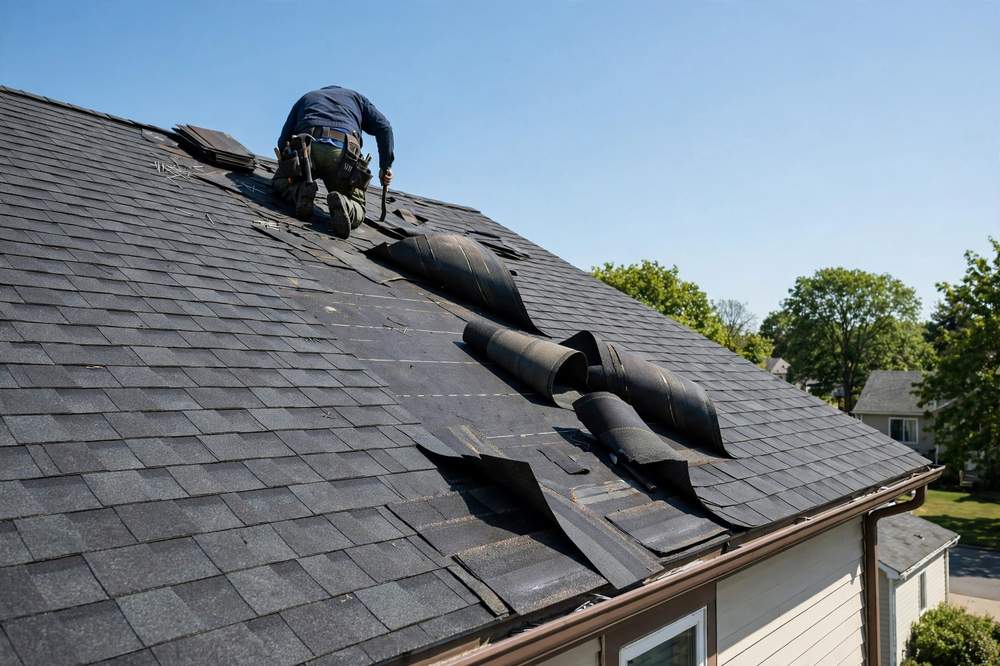
Roof-edge leaks and gutter leaks look alike; repair work finds which one is actually failing.
View service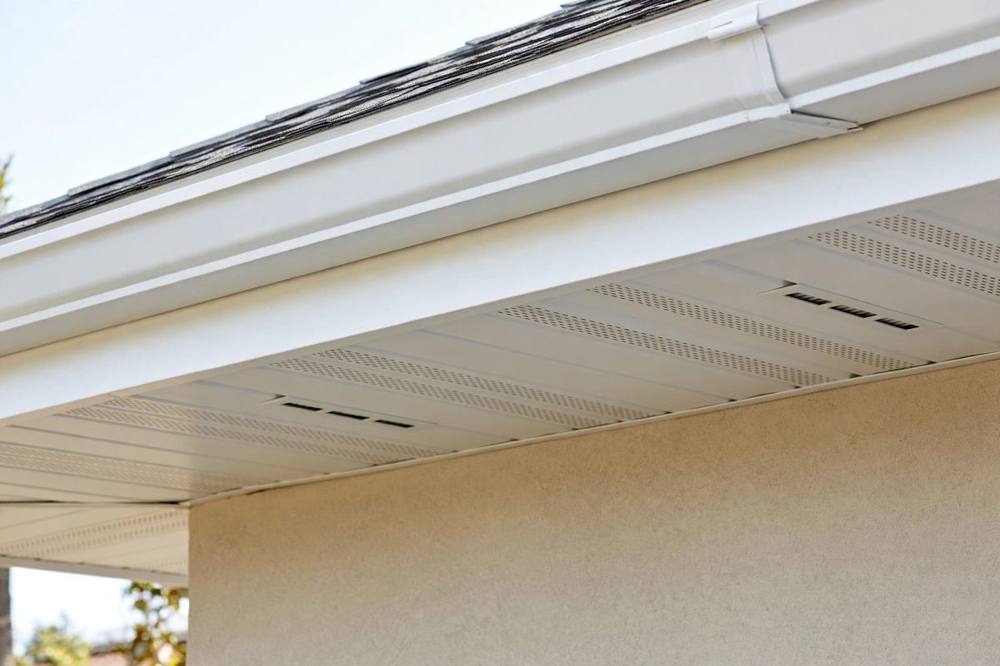
Soft fascia will not hold new hangers — fascia repair comes before re-hanging a gutter.
View serviceWhen sections are rusted through or repeatedly failing, a new run is discussed as its own scope.
View service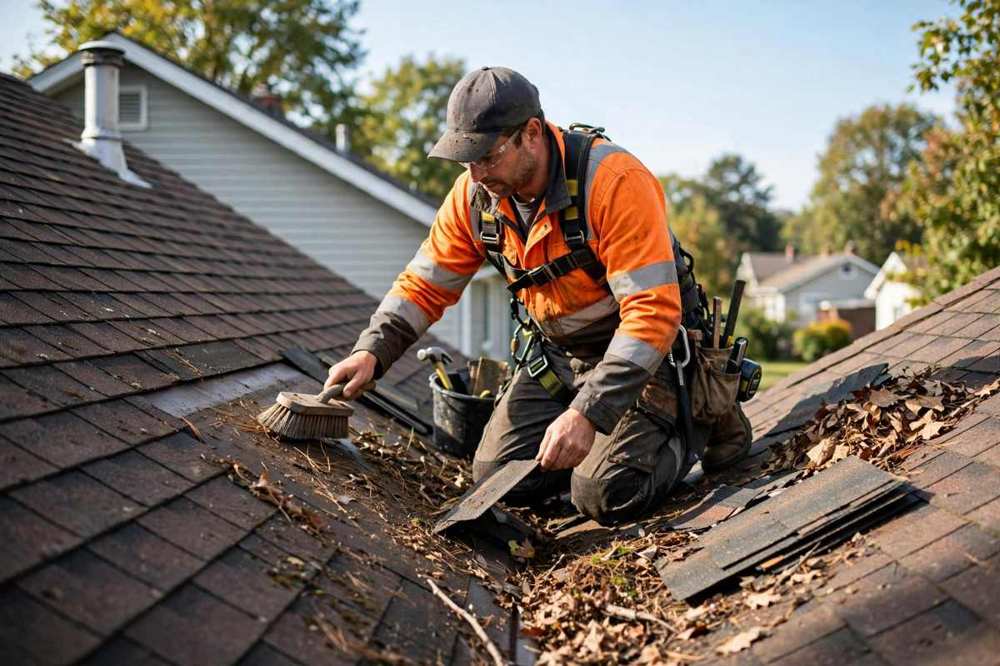
Seasonal clearing and inspection catch pitch and joint failures before the wet season.
View serviceCall us at +1 (562) 600-4041 to discuss an estimate. Our phones are open 24 hours every day. Tell us what the roof is doing and we will tell you what it needs.