Gardena-based team
Based at 1247 W 130th St, Gardena, and open 24 hours every day.
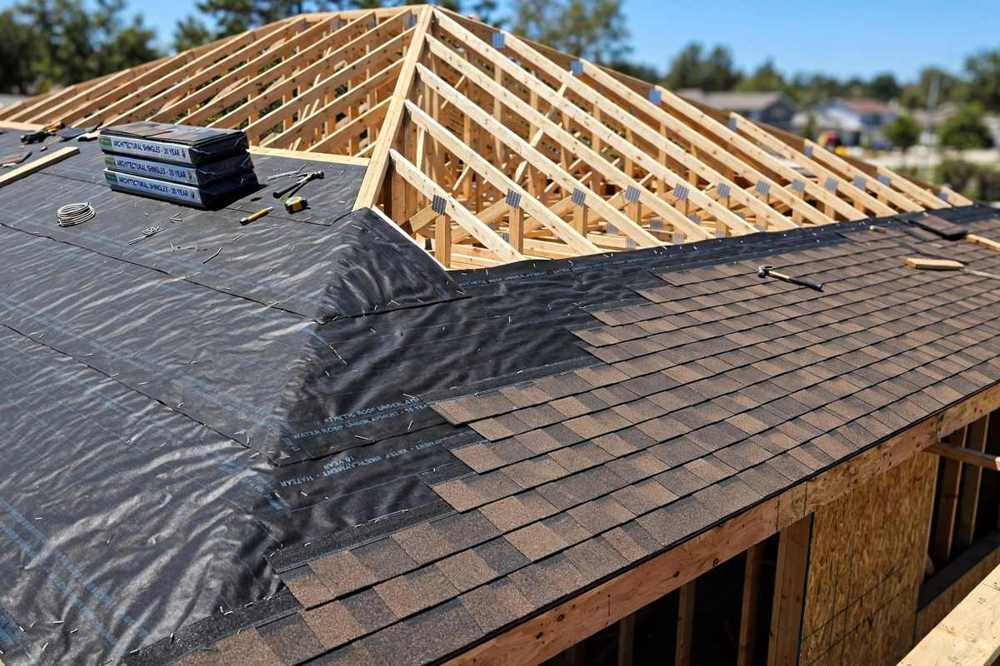
Roof installation Gardena means putting a first roof on something new: a new home, an addition, an ADU, or a garage. The work starts with framing and deck, then underlayment, flashing, and ventilation, and only then the covering itself. That sequence is what separates this page from a replacement, where an old roof is torn off first.
Based at 1247 W 130th St, Gardena, and open 24 hours every day.
Review the approach and call for an estimate before deciding.
What is found on the roof is shown, not just described.
Follow-through from first call to final walkthrough.
A first roof is a system, not a single layer. Each item below is part of getting a new Gardena roof weathertight from its first winter.
The structure and deck are checked before anything is covered: sound sheathing, correct slope, and a solid base for fasteners. Problems found here are fixed while they are still easy to reach.
Underlayment goes over the whole deck as the secondary water barrier, with extra attention at valleys and penetrations where water concentrates.
New flashing where the roof meets walls, chimneys, vents, and pipe boots. On a new build this is set while walls and penetrations are accessible, which is the right time to get it right.
Intake and exhaust ventilation are planned with the roof, not added as an afterthought, so hot Gardena summer air has a way out of the attic.
Asphalt shingle, tile, metal panel, or a low-slope membrane, matched to the roof pitch and to cool-roof compliance checked at permit stage for the roof type.
The finished roof is walked and photographed, and the scope, materials, and permit paperwork are left in one place for the owner.
Share what is happening and receive a clear next step from the local team.
A new roof in Gardena is planned around two local facts: long, hot, sunny summers that age a roof from above and bake the attic from below, and winter rain that arrives in bursts after months of dry weather. A first covering has to handle both, and it has to be detailed at every joint before the first storm tests it.
Gardena is an incorporated Los Angeles County South Bay city (incorporated 11 September 1930, 5.86 sq mi, 2020 population 61,027), with a median year built of 1964 and its largest building decade 1950–59 (28.4%). It is flat, at about 49 ft, with concentrated winter rain of about 13–14 inches a year, mostly November to March and near-zero June to September, plus Santa Ana wind season and strong sun and heat ageing. City of Gardena form BLD-020 (rev. 12/2/25) gives the design criteria as 100 mph wind, Exposure C, Seismic Design Category D, and Climate Zone 8. Permits are issued by the City of Gardena Building & Safety, 1700 W 162nd St — City counter (310) 217-9530 — not LADBS, which covers the City of Los Angeles only. For a new build or addition, the permit route runs through the City of Gardena, and cool-roof compliance is checked at permit stage for the roof type and area involved, using CRRC-listed products. Related reading on hiring is in the blog link at the bottom of this page.
Call to discuss an estimate. The site, plans, framing, and deck are looked at, and the roof pitch, penetrations, and tie-ins are noted.
The covering is matched to pitch and to cool-roof compliance checked at permit stage, and the full sequence — deck, underlayment, flashing, ventilation, covering — is set out in writing.
Sheathing is confirmed sound, underlayment is laid across the field, and valleys and penetrations get their extra layer before the covering starts.
Flashing goes in at walls and penetrations as the covering progresses, so each joint is built into the system rather than sealed over afterwards.
The finished roof is walked and photographed, and permit and material paperwork is handed over with a note on what to watch at the first rains.
Courses and panel lines are laid out straight from the start; a crooked first course shows on every course after it.
Fasteners are driven to the depth and pattern the covering manufacturer specifies, because fastening is part of the system's wind performance.
Flashing and drip edge are cut and formed to fit walls, chimneys, and penetrations on site.
Deck moisture and slope are checked before covering, so a damp or low spot is found while it can still be corrected.
Fall protection is used on pitched work, and access is planned so materials arrive without damaging finished work below.
Each stage — deck, underlayment, flashing, finished field — is photographed, so the owner can see what is hidden under the covering.
The addition's deck and underlayment are built out, and the valley and wall flashing at the tie-in are detailed as part of the new work, not left to sealant. The result is one continuous system across old and new.
A low-slope or pitched covering is chosen for the garage's own pitch and drainage, with its own flashing and ventilation, rather than copying the house roof without checking.
Deck, underlayment, flashing, and covering are sequenced with the permit and inspection steps, so no layer is covered before it has been checked.
Gardena is an incorporated Los Angeles County South Bay city (incorporated 11 September 1930, 5.86 sq mi, 2020 population 61,027), with a median year built of 1964 and its largest building decade 1950–59 (28.4%). It is flat, at about 49 ft, with concentrated winter rain of about 13–14 inches a year, mostly November to March and near-zero June to September, plus Santa Ana wind season and strong sun and heat ageing. New roofs here are usually on additions and outbuildings tucked into 1950s–60s tract lots, where access, staging, and the tie-in to the existing house matter as much as the covering itself. City of Gardena form BLD-020 (rev. 12/2/25) gives the design criteria as 100 mph wind, Exposure C, Seismic Design Category D, and Climate Zone 8. Permits are issued by the City of Gardena Building & Safety, 1700 W 162nd St — City counter (310) 217-9530 — not LADBS, which covers the City of Los Angeles only.
Small lots and older frontage mean staging is planned around neighbours and foot traffic, and addition tie-ins are detailed carefully.
Additions on mid-century lots often meet an existing low-pitch roof, so the tie-in valley and flashing get the closest attention.
Garages and ADU structures on larger lots still need their own drainage plan — a small roof that ponds is a small roof that leaks.
Southern Gardena additions and outbuildings sit in the city's older stock, where the existing roof's condition decides how the tie-in is built.
North Gardena tract additions commonly combine a pitched main roof with a low-slope section, and each pitch gets its own detailing.
About 13–14 inches a year, mostly November to March, means a new roof's first real test often comes in a single winter burst.
Long dry summers and high UV age coverings and sealants, so ventilation and material choice are set at installation, not later.
Gardena's code design criteria frame fastening and edge detailing for new roofs; they are design numbers, not a weather forecast.
A new addition stood framed and decked, with an open tie-in valley where it met the existing house roof and no flashing yet in place.
Underlayment, valley metal, and wall flashing were built into the new covering as it went on, and the finished joint was photographed before handover.
Maintenance: Watch the tie-in valley after the first winter rains, and keep it clear of leaves and debris.
A garage rebuild had a sound deck but no underlayment plan and a low spot that would have held water against the wall.
The deck was corrected, underlayment and flashing were installed, and a low-slope covering matched to the pitch finished the roof.
Maintenance: Keep the garage roof drainage clear and check the wall flashing after Santa Ana wind season.
A new home reached roof stage with penetrations for vents and a chimney already framed, but no flashing sequence agreed.
Flashing was installed as the covering progressed around each penetration, and the finished roof was walked and photographed.
Maintenance: Check penetrations and flashing after the first winter, when sealants and joints have had their first wet season.
A first roof fails later for a short list of reasons, and every one of them is decided during installation, not after.
An addition valley that was sealed rather than flashed will leak in the first winter burst. Building valley metal and flashing into the covering prevents a joint that only sealant was holding.
A new roof without planned ventilation bakes the attic and ages the covering from below. Intake and exhaust are sized with the roof, not guessed afterwards.
Flashing fitted over a finished covering is a patch. Flashing fitted as the covering goes on is part of the system, and it lasts like one.
A steep-slope covering on a low slope, or the reverse, will not drain or seal as intended. Pitch decides the covering, and the permit-stage cool-roof check confirms the product.
New-roof work in Gardena is judged on the layers nobody sees once the covering is on: the deck, the underlayment, and the flashing. Ask to see photos of those stages, and check the permit route for the job before work starts.
Full roof replacement plus seamless gutters; praised a detailed consultation, the company's own trained crew rather than subcontractors, daily project-manager presence, daily cleanup, and passing inspection.
First full roof replacement and new gutters; praised a step-by-step explanation and patience with insurance and financing questions, and clear communication.
Full roof replacement, gutters, gutter guard, and siding work in the reviewer's own account; praised colour renderings, scheduling, organisation, and communication, and options suited to Gardena sun and seasonal rain.
Leak leading to full replacement; praised a fast estimate and inspection, fair repair-versus-replacement advice, a 2-day install, and rooftop photos.
Reroof after poor workmanship and leaks on a new-home build; praised a thorough explanation, insurance-claim help, careful work on a steep roof with a special panel system, and cleanup.
Aggregate only for the other reviews: 4.9 stars across 42 reviews in total. Reviewers described pricing as fair; no dollar figure is claimed from reviews.
Yes. The City of Gardena states that most residential, commercial, and industrial construction work, including new construction and additions, requires a building permit. Confirm the permit type and forms for the job at the City counter, 1700 W 162nd St, (310) 217-9530.
Installation is a first roof on new framing and deck — a new build, an addition, an ADU, or a garage. Replacement is the tear-off and rebuild of an existing roof. The sequence differs because installation has no old layers to remove, while replacement starts by taking them off.
It depends on pitch, the tie-in to the existing roof, and cool-roof compliance checked at permit stage. Architectural asphalt, tile, metal panels, and low-slope membranes each suit different pitches; the choice is made for the roof in front of you, not from a catalogue default.
Ask how the tie-in flashing will be built, how ventilation is sized, what will be photographed at each hidden stage, and what the City permit route is for the job. The blog linked on this page covers hiring questions in more detail.
Not seeing your question? Our local team can help you understand urgency, scheduling and what to expect. Related reading: What to check before hiring a roofer in Gardena.
Ask the local team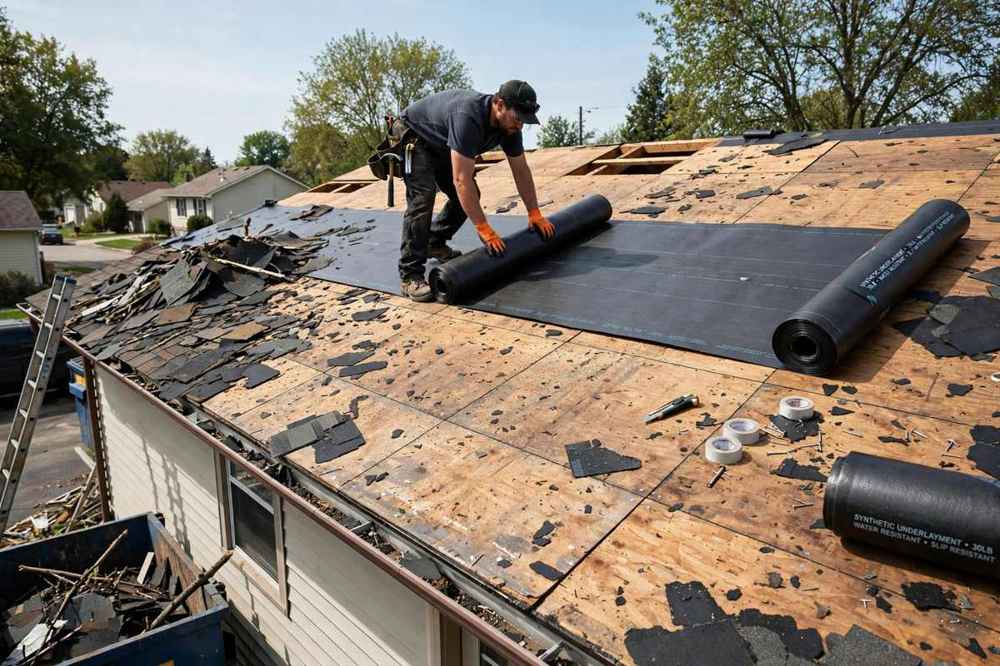
Full tear-off and rebuild when repair can no longer keep a roof sound.
View service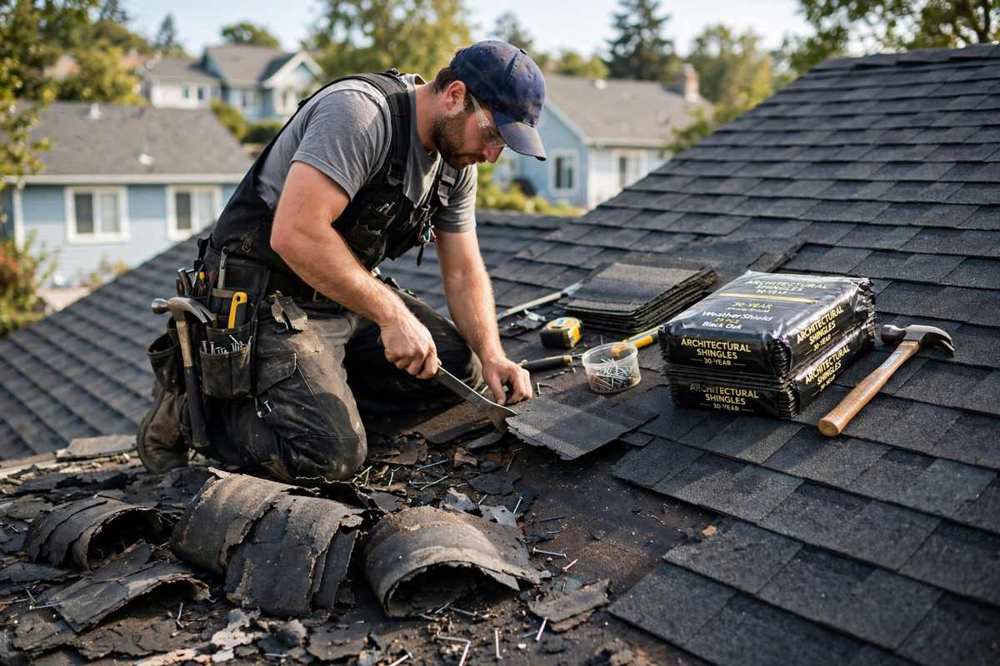
Targeted fixes for a defined problem, without replacing the whole roof.
View service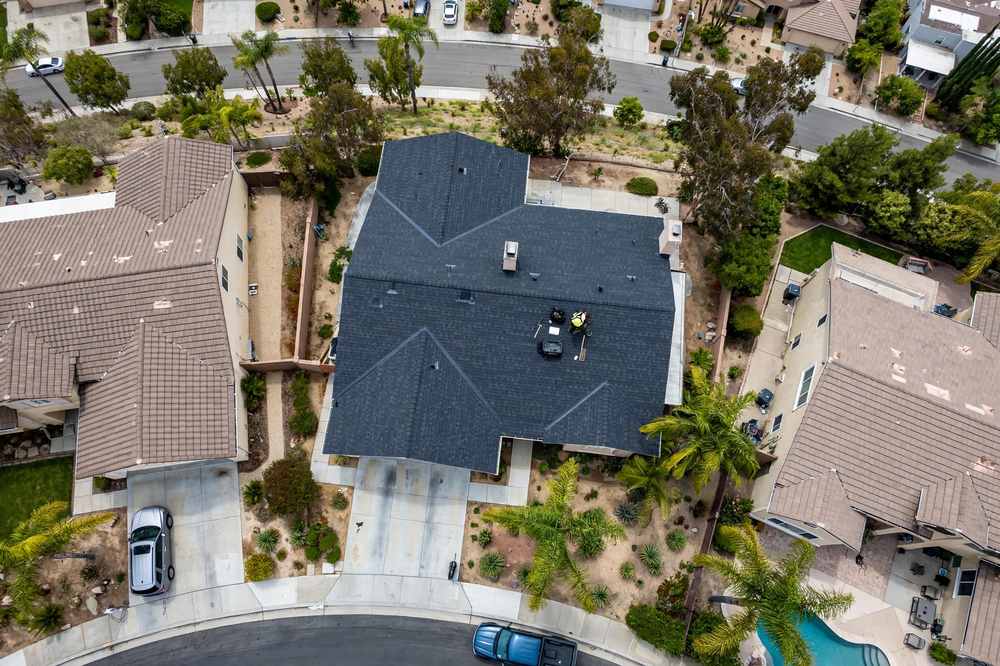
A documented look at condition and remaining life, with photos.
View service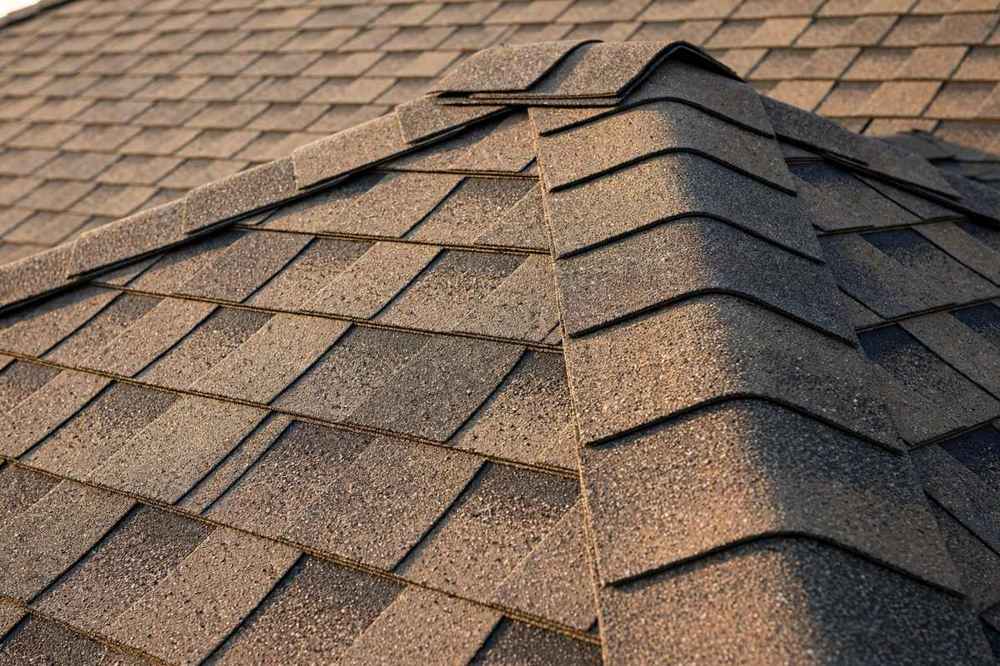
Cool-roof architectural asphalt for Gardena's sun and winter rain.
View serviceRelated reading: What to check before hiring a roofer in Gardena. Gardena locations for this service: Gardena Downtown, North Gardena, South Gardena, Moneta, Hollypark.
Call us at +1 (562) 600-4041. We are open 24 hours every day. Tell us what the roof is doing and we will tell you what it needs, and arrange a time to look at it.